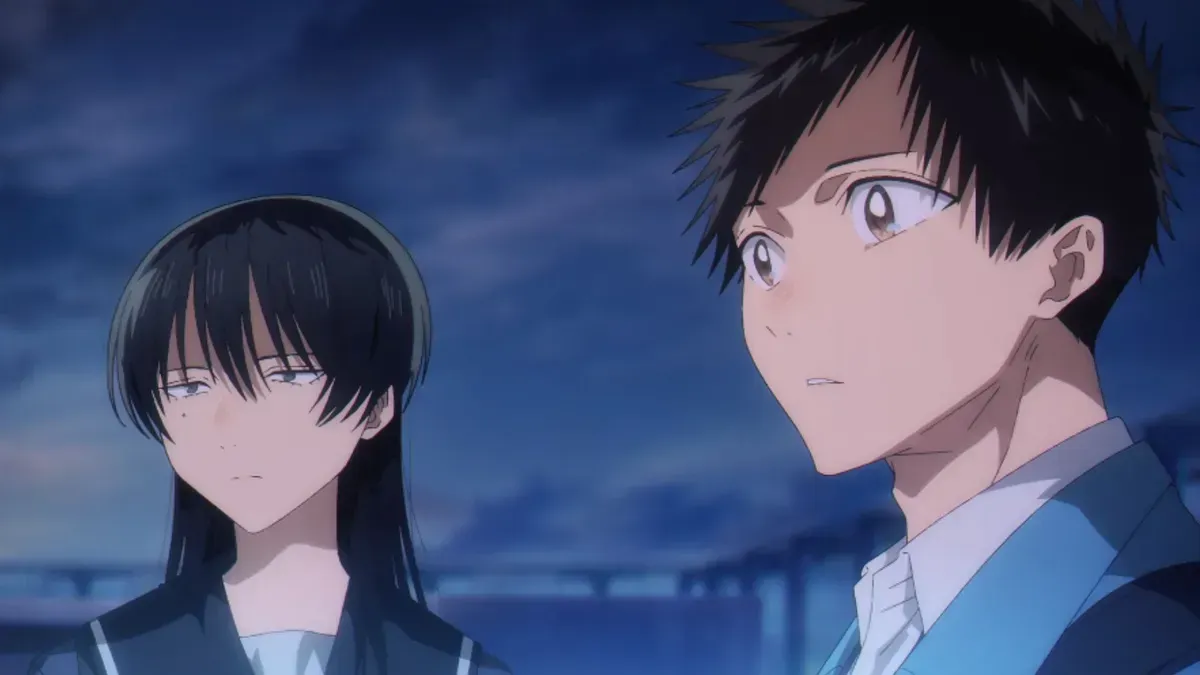

Blue Box is an easy show to recommend and a hard one to replace. Plenty of school romances are sweet. Plenty of sports anime are exciting. Very few try to be both at once and give each half the same weight, and that is why most lists of romance anime like Blue Box end up as lists of nice school romances with nothing else in common.
So I built this one differently. I started from what Blue Box actually does, then looked for anime that share specific parts of it: a sport that matters, a slow burn, a triangle that hurts, or two people chasing separate goals side by side. Every pick below says exactly what it shares and where it differs, so you can choose by the part of Blue Box you liked most.
There are no major spoilers here beyond each show's starting premise.
The short version
The closest romance anime to Blue Box are Suzuka, Cross Game and Baby Steps, which pair a real sport with a slow-building love story. Tsuki ga Kirei and Chihayafuru match its tone and its triangle. Insomniacs After School, Skip and Loafer, Kimi ni Todoke, The Fragrant Flower Blooms with Dignity and The Dangers in My Heart drop the sport but keep the gentle, patient romance.
What makes Blue Box different
Blue Box is Kouji Miura's manga from Weekly Shonen Jump, which ran from 2021 to July 2026. The anime's first season has 25 episodes, and a second season is airing now on Netflix. It won Best Romance at the Crunchyroll Anime Awards in 2025. Four things set it apart, and they are what I matched against.
- Sport and romance carry equal weight. Taiki plays badminton, Chinatsu plays basketball and Hina is a rhythmic gymnast. Their training is not background. Taiki wants to reach the nationals partly to feel worthy of standing next to Chinatsu.
- They live under one roof. Chinatsu moves in with Taiki's family when her parents go abroad, and the show plays that for quiet closeness, not for comedy.
- The triangle is fair. Hina is not an obstacle. She is a full character with her own sport and her own heartbreak, and the story takes her seriously.
- It is slow, and kind. Nobody is a villain. Progress is measured in small moments, like a shared morning in an empty gym.
If you are following the new season, my review of Blue Box season 2, episode 2 covers where the story has gone.
All 10 picks compared
| Anime | Genre | Episodes | Why it matches Blue Box |
|---|---|---|---|
| Suzuka | Romance, track and field | 26 | Boy takes up a sport for the athlete next door |
| Cross Game | Romance, baseball | 50 | Sport and love story built together over years |
| Baby Steps | Tennis, romance | 50 | Two athletes with separate goals who become a couple |
| Tsuki ga Kirei | Romance, school | 12 | Shy first love, a track club and the same head writer |
| Chihayafuru | Competitive karuta, romance | 74 | A fair love triangle inside a competitive club |
| Insomniacs After School | Romance, school club | 13 | Two people sharing a private space and a club goal |
| Skip and Loafer | School life, romance | 12 | Kind ensemble where the rival is treated fairly |
| Kimi ni Todoke | Romance, school | 37 plus a short third season | The slowest, gentlest slow burn there is |
| The Fragrant Flower Blooms with Dignity | Romance, school | 13 | Warm, sincere leads; also on Netflix |
| The Dangers in My Heart | Romantic comedy, school | 25 | An awkward boy and a girl who seems out of reach |
1. Suzuka
Yamato Akitsuki moves from rural Hiroshima to Tokyo and lives in the building his aunt runs. His next-door neighbour is Suzuka Asahina, a talented high jumper. He joins the track team to get closer to her and finds out he has real speed as a sprinter.

What it shares: almost the whole premise. A boy falls for a gifted athlete, ends up living next to her, and takes his own sport seriously because of her. Like Taiki, Yamato starts out running for the wrong reason and slowly finds the right one. There is also a second girl, Honoka, who has liked him for years, so the triangle is here too.
Where it differs: Suzuka is pricklier than Blue Box. The leads argue, misread each other and make worse decisions, and the romance moves faster and gets messier. It is also a 2005 production and looks it; reviews at the time called the animation ordinary. Watch it for the story, not the visuals.
Episodes: 26 (2005, Studio Comet), from Kōji Seo's manga. Where to watch: licensed by Crunchyroll.
2. Cross Game
Ko Kitamura grows up next door to the four Tsukishima sisters. After a tragedy in the first episode, he and Aoba, a sister who cannot stand him and who happens to be a brilliant pitcher, spend their school years chasing a promise to reach Koshien, the national high school baseball tournament.

What it shares: this is the best example I know of sport and romance being one story. Every game changes how Ko and Aoba see each other, the way every tournament changes things between Taiki and Chinatsu. The characters live in and out of each other's houses. And the feelings are almost never said out loud; they show up in what people do.
Where it differs: it carries real grief, which Blue Box does not, and it covers many more years. Mitsuru Adachi's style is dry and understated, with jokes at the camera and long silences. The first episode is famous for a reason. Anime News Network called it the masterpiece of its season.
Episodes: 50 (2009 to 2010, SynergySP). Where to watch: Viz Media streamed it in the US when it aired; I could not confirm a current streaming home, which is the main reason so few people have seen it.
3. Baby Steps
Eiichiro Maruo is a straight-A student who joins a tennis club for exercise and gets hooked. He has no natural talent, so he studies the game the way he studies everything, filling notebooks with every shot. At the club he meets Natsu Takasaki, a gifted player set on turning professional.

What it shares: two athletes with their own ambitions who make each other better. Like Taiki, Eiichiro is a hard worker surrounded by more talented people, and the girl he likes is ahead of him. The relationship is healthy, steady and actually goes somewhere: the two do start dating.
Where it differs: the balance is reversed. One viewer on MyAnimeList put Baby Steps at about 80 percent sport to 20 percent romance and Blue Box at roughly the opposite, and that feels right to me. This is the pick for anyone who wished Blue Box showed more of the matches. The anime also stops well short of the 47-volume manga.
Episodes: 50 across two seasons (2014 and 2015, Pierrot). Where to watch: Crunchyroll.
4. Tsuki ga Kirei
Kotaro, a boy in the literature club who wants to be a novelist, and Akane, a runner on the track team, end up in the same class in their last year of junior high. They are both too shy to talk properly, so most of their courtship happens over text messages.

What it shares: more than any list I read gives it credit for, because none of them included it. Akane's track club matters to the plot. Each lead has an admirer who is a decent person, including the track club's captain, so the triangle is handled with the same fairness as Hina's. And there is a direct link behind the scenes: the series was written by Yūko Kakihara, who is also the series composer of the Blue Box anime.
Where it differs: the leads are younger and far more awkward, and the show is quieter still. Its common criticism is that it is slow. It is also complete in one season with a proper ending, which Blue Box cannot offer yet.
Episodes: 12 (2017, studio Feel, an original anime). Where to watch: Crunchyroll.
5. Chihayafuru
Chihaya Ayase discovers competitive karuta, a fast card game based on classical Japanese poems, through a transfer student called Arata. Years later, in high school, she starts a karuta club with her childhood friend Taichi, aiming to become the best in Japan and to meet Arata again.

What it shares: a love triangle where you can honestly root for anyone, set inside a club that trains for national tournaments. Taichi is this show's Hina: the friend who has always been there, works twice as hard and deserves better than second place. The matches are tense and the characters' feelings ride on them.
Where it differs: the romance is very much the slower half. Chihaya thinks about karuta first, second and third. It is also long, and after three seasons the anime still has not reached the end of the manga, which finished in 2022.
Episodes: 74 across three seasons (2011 to 2020, Madhouse). Where to watch: Crunchyroll and HIDIVE.
6. Insomniacs After School
Ganta cannot sleep at night and is miserable at school because of it. Looking for somewhere to nap, he finds the disused observatory, and a classmate, Isaki, who has the same problem. To keep the room, they revive the astronomy club.

What it shares: the feeling of Blue Box's early-morning gym scenes. Two people share a space and a time of day that belongs to nobody else, and the romance grows out of that routine. The club gives them a real goal to work at, with Ganta learning astrophotography, so their relationship is built on doing something together.
Where it differs: no sport, no triangle and a heavier undercurrent, since Isaki's insomnia has a serious cause. Some reviewers found it too slow. I think the pace is the point.
Episodes: 13 (2023, Liden Films), from Makoto Ojiro's manga. Where to watch: HIDIVE.
7. Skip and Loafer
Mitsumi Iwakura moves from a tiny town in Ishikawa to a top Tokyo high school with a detailed life plan and no idea how city kids behave. On day one she gets lost and is rescued by Sousuke Shima, an easygoing classmate with a past as a child actor.

What it shares: its kindness. Like Blue Box, it has no villains, only teenagers with insecurities, and it gives the girl who likes the male lead her own honest storyline. Both shows are about people who quietly improve each other.
Where it differs: it is a friendship story first. The romance is a thread, not the main plot, and there is far more comedy. If Blue Box's slow pace tested you, this will not fix that.
Episodes: 12 (2023, P.A. Works), with a second season listed for April 2027. Where to watch: Crunchyroll.
8. Kimi ni Todoke: From Me to You
Sawako Kuronuma is so quiet and so unlucky in her looks that her classmates call her Sadako, after the ghost from The Ring. Shota Kazehaya, the most popular boy in class, is the first person to talk to her as she is. Friends follow, and then feelings.

What it shares: the slow burn, turned up as far as it goes. If Taiki's failed attempts to confess are your favourite kind of frustration, this is two seasons of it. It also has a rival who starts as an enemy and ends up one of the best characters, much as Blue Box refuses to make anyone disposable.
Where it differs: no sport at all, and the misunderstandings can drag in the second season. It is told from the girl's side, which Blue Box only started doing properly in its second season.
Episodes: 25 and 12 (2009 to 2011, Production I.G), plus a short third season made for Netflix in 2024. Where to watch: Netflix.
9. The Fragrant Flower Blooms with Dignity
Rintaro Tsumugi goes to a rough public boys' school and looks more frightening than he is. Kaoruko Waguri goes to the elite girls' academy next door. The two schools despise each other. She becomes a regular at his family's cake shop anyway.

What it shares: the tone. This is a sincere, soft-spoken romance about two decent people, with a strong group of friends around them and very good production values. It is also the show that took Best Romance at the Crunchyroll Anime Awards the year after Blue Box did, and it sits on the same service.
Where it differs: the obstacle is social, not sporting, and the two get close much more quickly. Its first episode has a darker scene that some reviewers disliked. No lists I checked had picked it up yet, probably because it is so recent.
Episodes: 13 (2025, CloverWorks), from Saka Mikami's manga. Where to watch: Netflix.
10. The Dangers in My Heart
Kyotaro Ichikawa is a gloomy middle schooler who imagines himself as a dangerous loner. He fixes his attention on Anna Yamada, the tall, popular class idol, and then keeps running into her in the library, where she turns out to be odd, greedy for snacks and oddly interested in him.

What it shares: a boy who thinks the girl is out of his league, told almost entirely through his head, with a relationship that grows one small gesture at a time. Like Chinatsu, Yamada has a life and a career outside the romance, and the story respects it.
Where it differs: it starts as an edgy comedy, and the first two or three episodes are a poor guide to what it becomes. It is the loosest match on this list, and I put it here because the payoff is as satisfying as any romance of the last few years.
Episodes: 25 across two seasons (2023 and 2024, Shin-Ei Animation), plus a 2026 compilation film. Where to watch: HIDIVE.
Which one to watch first
- You want the same premise: Suzuka.
- You want sport and romance done as well as Blue Box, or better: Cross Game.
- You want more of the actual sport: Baby Steps.
- You want something short and finished: Tsuki ga Kirei.
- You were on Hina's side: Chihayafuru, for Taichi.
- You want to stay on Netflix: The Fragrant Flower Blooms with Dignity, then Kimi ni Todoke.
My own order would be Cross Game, then Tsuki ga Kirei, then Baby Steps.
A note on where to watch
The services named above are the official licensors I could confirm. Netflix carries Blue Box, Kimi ni Todoke and The Fragrant Flower Blooms with Dignity. For the Crunchyroll and HIDIVE titles, catalogues differ from country to country and I have not been able to confirm each one for India, so check the service before you plan a weekend around it.
FAQ
What anime is most similar to Blue Box?
Suzuka is the closest in premise: a boy takes up track and field because of the high jumper who lives next door. Cross Game is the closest in quality and in how it blends sport with romance.
Is there a sports romance anime like Blue Box?
Yes. Suzuka (track and field), Cross Game (baseball), Baby Steps (tennis) and Chihayafuru (competitive karuta) all combine a competitive club with a love story.
What should I watch after Blue Box on Netflix?
The Fragrant Flower Blooms with Dignity and Kimi ni Todoke are both on Netflix and both are gentle, slow-building school romances.
Is there an anime like Blue Box with a love triangle?
Chihayafuru has the best one, between Chihaya, Taichi and Arata. Suzuka and Tsuki ga Kirei also have triangles in which the rivals are treated fairly.
Which anime like Blue Box are short?
Tsuki ga Kirei and Skip and Loafer have 12 episodes each, and Insomniacs After School and The Fragrant Flower Blooms with Dignity have 13.
Is Blue Box a shonen or a shojo?
It is a shonen series, published in Weekly Shonen Jump, although its focus on romance and its art style are often compared to shojo manga.
Is the Blue Box manga finished?
Yes. The manga by Kouji Miura ended in July 2026 after just over five years in Weekly Shonen Jump.
Is Blue Box season 2 out?
Yes. Season 2 began on 4 October 2026 and streams weekly on Netflix. It is animated by Electric Circus, which took over from Telecom Animation Film.
Are any of these anime complete stories?
Cross Game and Tsuki ga Kirei tell complete stories. Most of the others, including Chihayafuru, Baby Steps and Skip and Loafer, stop before their manga ends.
Is Hanebado! like Blue Box because of the badminton?
Only in the sport. Hanebado! is an intense badminton drama with no real romance, so I left it off a list built around romance.
My verdict
Nothing here is a copy of Blue Box, and I think that is good news. Cross Game does the sport-and-love-story blend with more weight. Tsuki ga Kirei does the shyness with more nerve. Baby Steps shows the work. If I could only send you to one, it would be Cross Game. It is the oldest idea on this list, done by the author who has spent a career on it, and it is still the one to beat.